
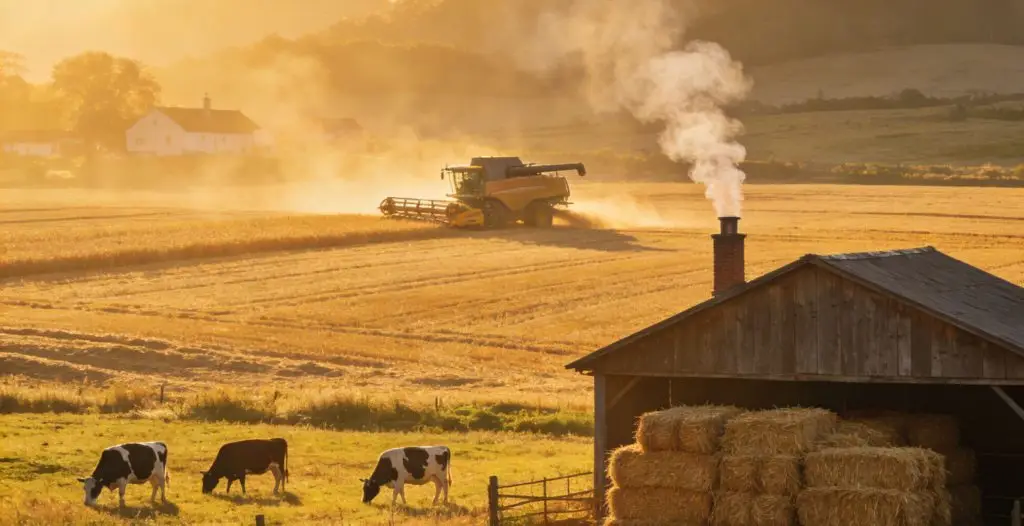
In agriculture and animal husbandry, humidity control is crucial. Optimal humidity levels facilitate plant growth, improve seed germination rates, and maintain a comfortable environment for animals, promoting their health and productivity. Low humidity can lead to plant wilting, increased dust, and a higher incidence of respiratory diseases in animals. High humidity can foster the growth of mold and pathogenic microorganisms, affecting the quality of agricultural products and the profitability of livestock farming.
In this article, we’ll explore why agriculture and animal husbandry use industrial humidifiers, the benefits of proper humidity control, and how the right humidification system can optimize cloth production.
Why is humidity control so crucial for the agriculture and animal husbandry?
In agriculture and animal husbandry, plants and animals are highly sensitive to environmental humidity. Crops require an appropriate level of air humidity (typically between 50% and 80%) during their growth process. Low humidity can lead to leaf dehydration, wilting, and a decrease in seed germination rates, while high humidity can facilitate the growth of mold and pathogenic microorganisms, affecting crop health and yield. Animal rearing also requires stable humidity (usually between 50% and 70%). A dry environment increases the risk of respiratory diseases and stress responses, while high humidity can lead to mold growth, parasite proliferation, and the spread of diseases. By controlling suitable humidity levels, it is possible to promote plant growth, improve animal health and productivity, and ensure the quality and yield of agricultural products. Improper humidity control can result in reduced crop yields, compromised animal health, and decreased farming efficiency.
What are the primary challenges posed by low humidity for the -agriculture and animal husbandry?
1. Disruption of crop growth
Dry air causes plants’ leaves and stems to lose moisture, leading to a decline in photosynthetic efficiency.
The germination rate of seeds has decreased, and the growth of seedlings has been slow, potentially leading to a decline in yield.
2.Increased risk of pests and diseases
Dry conditions can accelerate the spread of dust and microorganisms, making certain pests more active and adversely affecting crop health.
3. Impact on animal health
Dry air irritates an animal’s respiratory tract, increasing the incidence of respiratory diseases.
Drying fur and feathers can lead to skin problems and stress responses, which can negatively impact growth and egg or milk production.
4. Decreased comfort in the living environment
Low humidity leads to a dry environment and an increase in dust, restricting animal movement and making management more challenging.
5. Decline in the quality of agricultural and livestock products
Water loss in crops can negatively impact the quality of fruits and vegetables, while animal health issues may reduce the yield and quality of meat, eggs, and dairy products.
6. Decreased productivity
Due to reduced crop yields and an increase in animal diseases, there is a need for more management and handling measures, which increases costs and reduces overall efficiency.
Benefits of Industrial Humidifiers in Agriculture And Animal Husbandry
Installing an industrial humidification system provides several key advantages for agriculture and animal husbandry:
Promotes crop growth
Maintains optimal humidity levels, reduces leaf desiccation and seedling wilting, and increases yields.
Improving animal health
Maintain appropriate humidity levels in the living environment to reduce the incidence of respiratory diseases and stress responses.
Reduction of pests and diseases
This helps to suppress dust and pest activity, thereby decreasing the incidence of diseases among crops and animals.
Improve product quality
Enhance the quality of crops and fruits, and ensure stable quality standards for meat, eggs, dairy products, and other agricultural and livestock products.
Increased production efficiency
Reduced losses due to diseases and simplified management, leading to improved overall farming and cultivation efficiency.
Enhance environmental comfort
- Reduce dust and dry conditions to improve the suitability of growth for crops and animals.
Types of Industrial Humidifiers Used in agriculture and animal husbandry
Different humidification technologies are used depending on factory size and production requirements.
High-Pressure Mist Humidifiers
The water is atomized into extremely fine particles using a high-pressure pump, allowing it to evaporate quickly and evenly cover large areas.
Ideal for large-scale humidity control in livestock barns, greenhouses, and other structures.
Ultrasonic Humidifiers
Ultrasonic oscillation is used to convert water into fine mist, resulting in low energy consumption and fine mist particles.
Ideal for use in greenhouse cultivation, small seedling nurseries, or localized humidification in animal enclosures.
Steam humidifier
Steam is generated through heating to increase air humidity, with high precision in humidity control.
It is suitable for environments such as brooding rooms and breeding areas, which have high humidity requirements.
Wet-film humidifier
Steam is generated through electrical heating or a boiler and released into the air.
The humidity control is highly accurate, making it suitable for process environments where high demands are placed on humidity stability.
The humidification process through wet-film evaporation also provides a cooling effect.
It is suitable for regulating humidity and cooling in greenhouses for seedling cultivation and fattening pens.
Centrifugal industrial humidifiers
Water is propelled into a mist-like state using high-speed rotation, making the device simple in design.
Ideal for agricultural and livestock facilities with limited budgets or basic humidification needs.
How to Choose the Right Humidification System for a Agriculture And Animal Husbandry?
When selecting an industrial humidifier for agriculture and animal husbandry, several factors should be considered:
- Factory size and layout
- Environmental ancillary requirements
- Required humidity range
- The production speed of the textile machine
- Energy efficiency requirements
- Maintenance and operational costs
- Water quality conditions
Working with an experienced humidification supplier can help determine the most suitable solution for your specific agriculture and animal husbandry environment.
Conclusion
Controlling humidity is also crucial in agricultural and livestock production, but it is often overlooked. Industrial humidifiers can maintain an optimal level of humidity, promoting plant growth, improving seed germination rates, and providing a healthy and comfortable environment for animals.
By configuring an efficient humidification system, agricultural and livestock farms can increase crop yields and animal health, reduce the incidence of diseases, and ensure production efficiency and product quality.
As modern agricultural and livestock-rearing technologies advance, industrial humidifiers will continue to be an essential component of agricultural and livestock production environments.