
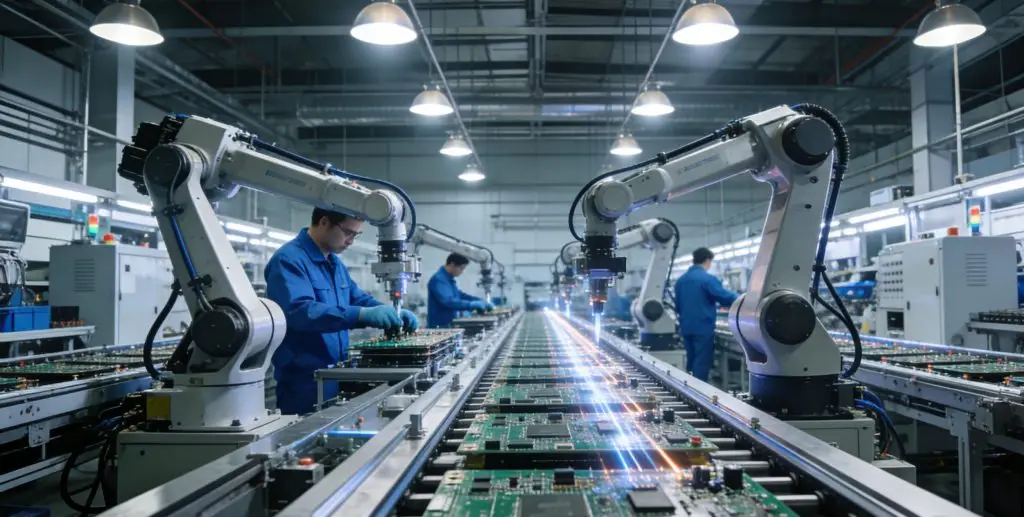
In electronic factories, humidity control is crucial. Low humidity can easily generate static electricity, damaging sensitive components. High humidity can lead to circuit short circuits, welding defects, and corrosion. Maintaining stable humidity not only safeguards electronic components but also improves production yield and process stability, ensuring efficient production and product reliability.
In this article, we’ll explore why electronics factories use industrial humidifiers, the benefits of proper humidity control, and how the right humidification system can optimize cloth production.
Why is humidity control so crucial for the electronics factories?
Electronic components are primarily composed of semiconductors, metal wires, plastics, and solder. These materials are highly sensitive to air humidity. When humidity is too low, static electricity can easily build up on the surface of electronic components, potentially causing damage to integrated circuits or disrupting production processes. Conversely, high humidity can lead to oxidation, short circuits, or corrosion of solder joints, affecting device performance. Electronic factories typically maintain relative humidity levels between 40% and 60% to balance the requirements for static protection and moisture resistance. Within this range, components are safer, welding quality is stable, and production yields are higher. If humidity control is inadequate, it can result in static damage, component failure, increased welding defects, and a decline in overall production efficiency.
What are the primary challenges posed by low humidity for the electronics factories?
1. Increased buildup of static electricity
In dry environments, the air resistance is high, and static electricity easily accumulates on the surfaces of electronic components.
Electrostatic discharge (ESD) can damage sensitive chips and integrated circuits, leading to device failure or reduced performance.
2. Unstable welding process
Low humidity makes it more prone for solder to develop welding defects during reflow or wave soldering processes, such as cold welding, bridging, or cracking of solder joints.
The bonding strength between components and PCB boards has decreased, affecting long-term reliability.
3. Components are prone to brittle degradation
Plastic packaging and composite materials can become brittle in dry environments due to insufficient moisture, increasing the risk of damage during transportation, assembly, or operation.
4. Production environment issues
Dry air increases the adsorption and dispersion of dust, which can contaminate the surface of sensitive components and affect the quality of soldering and assembly.
The combined effects of static electricity and dust can lead to production line downtime or a decrease in yield quality.
5. Decline in quality and reliability
Electronics that are stored or manufactured under conditions of low humidity for an extended period may experience early failures, performance fluctuations, or a shortened lifespan.
Benefits of Industrial Humidifiers in Electronics Factories
Installing an industrial humidification system provides several key advantages for electronics manufacturers:
Reduce the risk of static electricity
- Maintain an appropriate level of humidity to minimize the buildup of static electricity and protect sensitive components.
Improving Welding Quality
- Stable humidity helps prevent defects in solder joints, ensuring reliable PCB welding.
Improve the yield rate of production
- reduce damage to components and production downtime, thereby increasing output efficiency.
Extending the lifespan of components
- preventing the degradation of plastic enclosures and composite materials to ensure long-term reliability of the products.
Enhance the production environment
- control air humidity, reduce dust dispersal, and maintain a clean production environment.
Ensure stable operation of equipment
reduce the interference caused by static electricity on production equipment and minimize the occurrence of faults.
Types of Industrial Humidifiers Used in electronic factories
Different humidification technologies are used depending on factory size and production requirements.
High-pressure micro-spray/dry-mist humidification system
The water is atomized into extremely fine droplets using a high-pressure pump, which quickly evaporates and is evenly distributed. This is suitable for large-scale production lines and cleanroom environments, as it effectively reduces static electricity and does not wet the equipment.
Ultrasonic Humidifiers
This technology uses high-frequency oscillation to convert water into ultra-fine mist particles. It does not heat the air and has low energy consumption, making it suitable for use in electronic assembly workshops, cleanrooms, and for localized humidification needs.
Steam/Resistance Humidifiers
By generating steam through heating, it provides humidity control with high precision and hygiene, making it suitable for electronic manufacturing environments with high cleanliness requirements.
Wet-film humidifier
With wet-film evaporation humidification, it has low energy consumption and no dust pollution, making it suitable for data centers or areas with moderate humidity requirements.
How to Choose the Right Humidification System for a Electronics Factories?
When selecting an industrial humidifier for a electronics factories, several factors should be considered:
- Factory size and layout
- Capability for electrostatic control
- Required humidity range
- Cleanliness standards requirements
- Energy efficiency requirements
- Maintenance and operational costs
- Water quality conditions
Working with an experienced humidification supplier can help determine the most suitable solution for your specific electronics factories environment.
Conclusion
Controlling humidity is also crucial in the production of electronic factories, but it is often overlooked. Industrial humidifiers can maintain an optimal level of humidity, preventing the buildup of static electricity, damage to components, and welding defects.
By configuring an efficient humidification system, electronic factories can ensure the safety of components, improve the yield rate of production, and stabilize the manufacturing process.
As electronic manufacturing technologies continue to evolve, industrial humidifiers will remain an essential piece of equipment in modern electronic factory environments.